
Bar Harbor Struggles with Cruise Ship Limits as Judge Overturns Ordinance
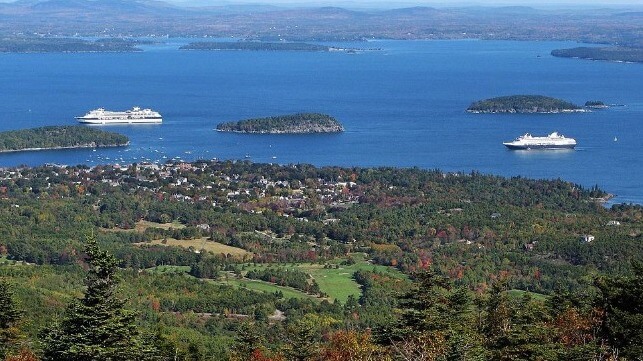
Bar Harbor, a picturesque town on the Maine coastline, continues to be one of the most closely followed examples as the local town council works to balance the number of cruise passengers with local residents and the annual tourist influx. It is an example of overtourism and the challenges of balancing the various, sometimes competing interests.
The Town Council was trying, in true New England fashion, to build a consensus between the competing factions. The U.S. Census estimates that in 2025, there were just 3,500 full-time residents of Bar Harbor, but data developed for the town showed an average of 11,500 visitors in the area of the waterfront in the summer, and peak days with 15,000 visitors near the waterfront.
Residents argued that downtown was impassable during these surges, largely coming from the cruise ships, and that the one-day visitors were detrimental to multi-day hotel stays from shore-side tourists. Many business owners who depend on the tourists wanted to maintain cruise ship visits, which were reported to number 100 or more cruise ships between May and late October each year. Opponents of the ban assert that cruise passengers are only a small portion of the total visitors, noting that nearby Acadia National Park gets two million visits each year, and many people also visit the town.
Faced with similar challenges, ports such as Juneau, Alaska, have reached a series of voluntary agreements with the cruise industry. Other destinations, such as the city of Amsterdam, have sought to move cruise ships out of the city center, while Greece instituted a new fee system for its most popular destinations, including Mykonos and Santorini, as did Mexico. The French Riviera established restrictions on the size and number of cruise ships anchoring at some of its most popular ports, while the residents of Key West, Florida, voted for restrictions on large cruise ships using the city pier.
The Bar Harbor Town Council tasked its Cruise Ship Committee to come up with a compromise, and it put forward in 2022 a plan to limit the number of passengers to approximately 3,200 to 3,500 people per day and between 30,000 and 65,000 per month, depending on the season. The opponents, however, were successful in pushing the issue onto a ballot, and in November 2022, the residents voted to limit cruise ship passengers to 1,000 per day.
Since then, the Town Council has found itself caught in the middle, having to defend the results of the vote against proponents of the cruise industry that sued to block the limits. The issue has gone back and forth in the courts, with positive and negative decisions. At the same time, a second vote attempting to repeal the restrictions was rejected by the residents by a small margin.
Bar Harbor began declining new reservations from cruise ships, and as a result, the Town Council says there will be fewer than 50,000 cruise visitors in 2026. The number is also expected to continue to decline as reservations made before the restrictions are completed.
The issue was sent back to a U.S. District Court earlier this year after a lower court pointed out contradictions in a prior ruling. Federal Judge Lance Walker heard further arguments and, on May 15, ruled that, other than in July and August when tourism is at its peak, the cruise restrictions were excessive and therefore unconstitutional.
The judge, who previously said he respects the residents’ vote, wrote in his decision, “I conclude that the ordinance’s 1,000-passenger cap is not clearly excessive in relation to its local benefit during the peak summer tourism season, but it is clearly excessive in relation to the shoulder seasons.” He found that the plaintiffs challenging the restriction made “more sensible” protests over the restriction in the shoulder season while the defendants’ “opposition lacks persuasive force.” He called for a more balanced approach during tourism’s shoulder seasons.
The Town Council said it would consider its next steps while assuring residents that it would not allow a return to the unsustainable levels of cruise ship visitations in the past. It also promised not to take new cruise ship reservations until an agreement can be reached that follows the court’s directions.
At the same time, the town is exploring broader issues related to tourism by establishing a Sustainable Tourism Task Force. It capped short-term vacation rentals and is exploring a lodging moratorium to focus on visitors staying a few days. The proponents of restrictions argue that shore-side visitors spend more, visit restaurants and other businesses, and their spending increases when they spend a few days versus the one-day short stopovers from a cruise.
The cruise lines have argued repeatedly that they can work with the local jurisdictions to manage the influx from the ships. They propose coordinating schedules and staggering arrival times.
The outcome of Bar Harbor’s efforts to balance the competing interests and provide an amicable solution could become a model for other popular tourist destinations that seek to manage the influx of cruise passengers.

that matters most
Get the latest maritime news delivered to your inbox daily.
Photo courtesy of Smudge 9000 via CC by 2.0 license)