
First Laden LNG Carrier and Japanese Tanker Exit from Persian Gulf
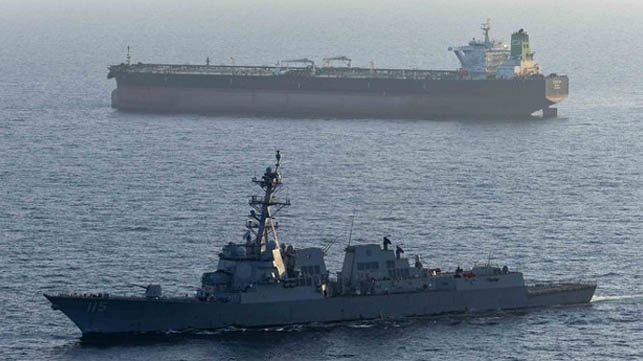
Analysts tracking shipping movement around the Strait of Hormuz are reporting that it appears the first laden LNG carrier escaped while the first Japanese VLCC also made the transit, raising some hopes that at least a few ships might be able to make the passage. However, overall traffic remains low as the U.S. and Iran appear to remain in a stalemate.
The Panama-flagged tanker Idemitsu Maru (300,433 dwt) started moving on Monday evening. The vessel is loaded with 2 million barrels of Saudi crude oil and, after traveling to the northern side of the Strait, began the transit and, as of Tuesday afternoon, has cleared into the Gulf of Oman, displaying a message of “For Orders” on its AIS.
Japan has been anxious to restore oil flows, drawing some sources from the United States after traditionally getting up to 95 percent of its imports from the Middle East. Reports said Japan had been making overtures to possibly free some of its stranded vessels.
Iranian media sources are reporting that the vessel, which is managed by a subsidiary of Japanese refinery Idemitsu Kosan, "secured permission" for the transit. There was no mention of terms or assertion that the tanker had paid for its safe passage.
The transit, however, came as the Strait remains at a virtual standstill. Reuters is saying only two ships crossed on Monday after Windward reported that eight ships, evenly split between inbound and outbound from the Persian Gulf, made the transit on Sunday. It also noted a decline in “dark activity” (i.e. ships without AIS transmissions), while concluding “that while movement has resumed, it remains sensitive to shifting operational conditions rather than stabilizing into a consistent flow.”
A broader mystery emerged after a UAE-managed LNG carrier suddenly appeared south of India, according to an AIS transmission. The Liberian-flagged Mubaraz (72,950 dwt) was last observed in the Persian Gulf at the end of March after loading a cargo of LNG. The vessel went dark for nearly a month, and ADNOC (Abu Dhabi National Oil Co.) is refusing to comment on the movement or position of its vessel.
Kpler is speculating the vessel might have slipped out during the lull on the weekend of April 18-19. If so, it would be the first laden LNG carrier to depart since the end of February, although several others have been seen moving toward the Strait. The AIS signal says the vessel is bound for Tianjin, China, where it is due May 15.
Analysts, however, note that individual vessels do not signal a broader opening of the waterway. Ship broker BRS wrote last week that it would take until at least mid-September to restore any resemblance to normal for ship movements.

that matters most
Get the latest maritime news delivered to your inbox daily.
This came as the White House reported it had received another proposal from Iran to reopen the Strait, reportedly in exchange for ending the U.S. blockade. While the White House was said to be reviewing the latest information, Secretary of State Marco Rubio did an interview on TV, saying it still called for Iran to control the Strait and to have the ability to charge tolls. He dismissed Iran’s proposals, saying it had to return to a free and open international waterway.
Reports are saying that the pressure is building on Iran as the U.S. continues to interdict its vessels. Windward’s analysis said there are at least 14 tankers (all dark), now holding east of Hormuz. U.S. Central Command at the end of last week said at least 34 vessels had been interdicted, stopping Iranian oil exports and the return of tankers to the Persian Gulf.