
Hormuz Traffic Ticks Up With More Vessels Outbound
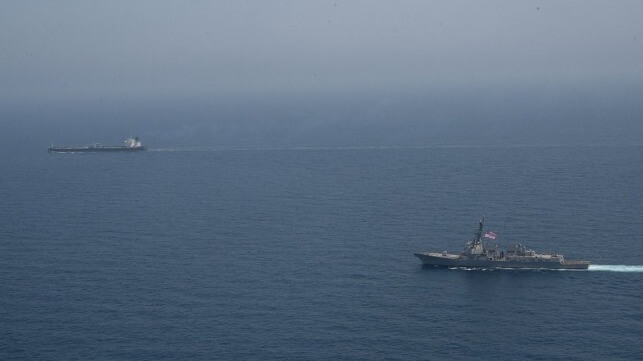
Traffic is picking up again in the Strait of Hormuz, despite dueling blockades by U.S. and Iranian forces, according to maritime security consultancy Windward. 19 vessels made the transit throught the waterway on April 25, most outbound and all of them broadcasting AIS - a possible sign of recovery, at least for one day. The number would have been higher if Iranian shipping interests had been unimpeded, but the U.S. Navy is working on making its naval cordon more efficient, with some success.
The most noteworthy crossing was the megayacht Nord, linked to Russia's wealthiest businessman, the sanctioned steel and mining magnate Alexey Mordashov. Iran has a friendly relationship with Moscow, based on defense ties, and has an incentive to allow Russian traffic to use the strait. Nord is immediately recognizable: she is an iconic Lurssen yacht, ranking among the largest in the world, and has a distinctive and imposing appearance designed to "cause strong emotions in every observer." The 460-foot yacht passed through the Iranian side of the waterway at about 0900 local time Saturday, and she is now in port at Muscat, Oman.
Other noteworthy transits included the sanctioned tankers Oceanjet and Lumina Ocean, both linked to Iran's petroleum industry. Other Iranian or Iranian-chartered vessels were not so lucky: 37 vessels have been intercepted and redirected since the start of the blockade, and three more have been seized. TankerTrackers.com assesses that $380 million worth of crude is in U.S. custody and under way for the United States, and another $1 billion in oil is back in Iran aboard tankers that were turned around by the blockade. The U.S. Treasury has assisted the campaign, placing sanctions on at least one vessel - the LPG carrier LPG Sevan - the day before it was interdicted and sent back to Iran under escort. The effort is well-resourced, with three carrier strike groups and one amphibious ready group operating in the broader region (among many other assets).
USN TRACKING: Tripoli ARG & Potential Interdiction
— MT Anderson (@MT_Anderson) April 26, 2026
Operating to the SE of Ras Al Hadd (~178km), we can also identify elements of the Tripoli Amphibious Ready Group.
????Spotted the USS Tripoli (LHA-7) operating with the USS Rushmore (LSD-47) and 1x Arleigh Burke escort.
????Imagery… pic.twitter.com/BaojEqFOf3
Full restoration of normal traffic levels will require a durable conclusion to the conflict, followed by a mine countermeasures effort to remove the naval mines that Iran has deposited near the strait's designated sea lanes. In a press conference Friday, Defense Secretary Pete Hegseth said that "we are confident in our ability" to clear mines from the waterway. He said that U.S. forces are already working on that task - but he acknowledged that the mines are a danger, and that the risks of transiting the strait are higher now than would be desired.
While waiting for the risk to abate, about 20,000 seafarers are trapped aboard the vessels that were caught inside the Gulf when the conflict began. The ordeal has been challenging for these crewmembers, who have had to endure uncertainty, food rationing, communications blackouts and the risk of attack. In a video message released Friday, IMO Secretary General Arsenio Dominguez said that his agency will redouble its efforts to make sure that seafarers are put first.

that matters most
Get the latest maritime news delivered to your inbox daily.