
Japan Certifies Its First RoRo with Autonomous Navigation
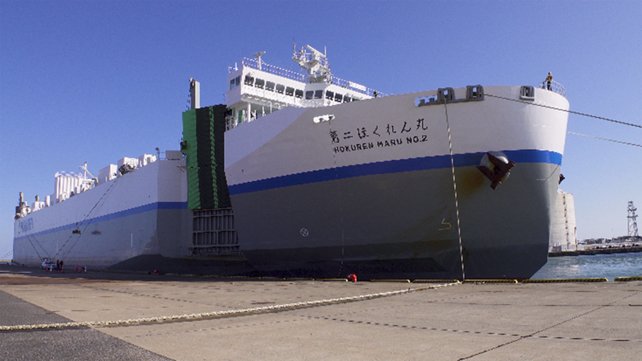
A RoRo that operates on a domestic route in Japan recently became the first vessel of its kind to complete the licensing requirements to conduct fully autonomous navigation during commercial operations. It was the latest step in an ongoing project sponsored by The Nippon Foundation to advance the development of autonomous ship operations.
The 6,890-dwt RoRo Hokuren Maru No. 2, owned and operated by Kawasaki Kisen Kaisha, Ltd. (“K” LINE), completed a series of certifications in January and February on its way to becoming the first autonomous RoRo. Built in 2016, the vessel is 173 meters (567 feet) in length and operates transporting trucks loaded with raw milk and other agricultural products between Kushiro Port on the northern island of Hokkaido and the Hitachi Port in central Japan north of Tokyo. The ship was selected for the project both because of the critical importance of RoRos in the Japanese economy and because it travels a route that is busy with fishing vessels and subject to rough weather and fog.
The vessel was retrofitted with sensors that feed data to the system to determine navigation. The working group, which consisted of K Line, Japan Radio, and YDK Technologies, started in 2023 and conducted its first tests aboard the RoRo in October 2023. They reported the system achieved an average operational rate of 96 percent in the sea area during its first tests. They continued to enhance the system, including in 2025, working on improvements in the fully autonomous ship technology and the development of an automatic vessel speed control system, before additional demonstration tests.
ClassNK (Nippon Kaiji Kyokai) issued the vessel certification for autonomous shipping to the RoRo on January 27, 2026. The ship passed its statutory ship inspection by Japan’s Ministry of Land, Infrastructure, Transport and Tourism on February 9. It has now completed all the required steps needed to operate autonomously during commercial operations.
The Nippon Foundation launched the project in 2020, known as MEGURI2040, with the goal of achieving 50 percent unmanned operation of domestic vessels by 2040. The motivation was to address Japan’s declining and aging population of seafarers, reduce the workload for seafarers, and prevent accidents at sea due to human error.
During the first phase of the project, they demonstrated systems for key elements of operations. This included tests in Tokyo Bay as an example of a congested shipping area, a distance test of nearly 500 miles, and an endurance test lasting more than 18 hours. Elements of operations, such as berthing, were also demonstrated.
that matters most
Get the latest maritime news delivered to your inbox daily.
The Hokuren Maru No. 2 is the third demonstration vessel in the project to achieve the autonomous ship classification. Last December, a RoPax ferry was the first vessel to receive the certification. The project has also developed a domestic containership, Genbu (8,597 dwt / 140 TEU), which was built for autonomous operations.
The Nippon Foundation expects to obtain valuable data from these vessels as it seeks to commercialize the technology. A consortium of 53 companies is participating in the project, which they hope will provide stability to the country’s supply chains. They are also contributing to the overall development of the global standards for autonomous ship operations.