
Royal Navy's Top Officer Needs Four Years to Restore Readiness
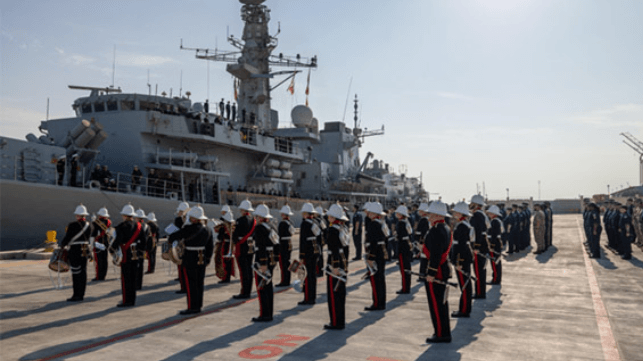
The Royal Navy's top officer believes that the service may not be fully ready for war until the 2030s, given the current state of the service and the results of a recent defense review.
"I would say that we can conduct advanced operations right now, and if we were told to go to war, of course, we would. That is my military duty," First Sea Lord Gen. Sir Gwyn Jenkins told Sweden's Svenska Dagbladet. "But are we as ready as we should be? I don’t think we are. We have work to do, and I am completely dedicated to the mission."
The Royal Navy faces challenges in nearly every division, and its commissioned hull count is the smallest it has been in three centuries. Its Type 23 frigates are exiting service before the arrival of next-generation Type 26 and Type 31s, creating a "frigate gap." The Type 45 destroyer series was limited to six hulls for cost-saving, and is in the midst of an engine upgrade program to improve reliability. Its ballistic missile and attack-sub forces have encountered serious maintenance issues reducing availability. And manning shortfalls in the service (and critically, in the Royal Fleet Auxiliary) restrict its overseas reach. In the midst of a Mideast conflict, the service has no high-end combatants east of Suez, having recently retired the last of the frigates stationed at Bahrain.
Jenkins added that "according to the defense investigation that was completed last year, I will be ready for war by the end of this decade."
In the meantime, the UK has a maritime security challenge on the home front in the form of the Russia-facing "shadow fleet" - the growing collection of tankers that serve sanctioned Russian energy exports out of Ust-Luga and Primorsk. Last week, UK Prime Minister Keir Starmer issued an order to UK forces to board and seize Russia-linked tanker tonnage, aligning British policy with a campaign initiated by Sweden, Belgium and France.
"We’re going after [Russian President Vladimir Putin's] shadow fleet even harder, not just keeping Britain safe but starving Putin’s war machine of the dirty profits that fund his barbaric campaign in Ukraine," Starmer said. "He and his cronies should be in no doubt, we will always defend our sovereignty and stand with Ukraine for as long as it takes."
that matters most
Get the latest maritime news delivered to your inbox daily.
Since the announcement last Thursday, the UK has not yet announced a boarding; over the period, Reuters has tracked two dozen sanctioned ships passing through British waters of the English Channel. Others appear to be using the longer route north of Scotland and into the North Atlantic, skipping British jurisdiction en route to the Strait of Gibraltar.