
Russian Strike Hits Foreign-Flagged Bulker Off Coast of Odesa
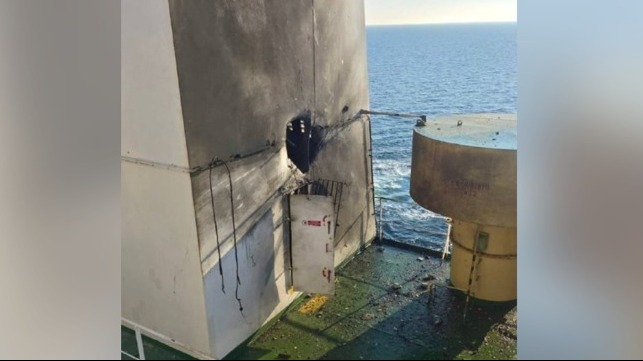
On Tuesday morning, Russian forces hit a foreign-flagged merchant ship at a port in the Odesa region, according to Ukrainian authorities. It is the latest in a long string of Russian strikes on civilian vessels in and around Ukraine, part of Moscow's effort to damage the Ukrainian economy.
"A Russian drone hit a civilian merchant ship under the Liberian flag, which was heading along the sea corridor to load corn," Ukraine’s Ministry of Community and Territorial Development said in a brief notice. "The crew managed to quickly extinguish the fire. Fortunately, no one was injured. The ship continued its movement and reached the port."
Reuters has identified the vessel as the Lady Maris (IMO 9228071), a bulker flagged in Liberia, owned in the UAE and managed in India.
In addition, the Russian strike hit the port of Izmail and damaged an additional ship flagged in Panama.
Operations continue, the agency said. "Ukraine continues to ensure the operation of the sea corridor and fulfill export obligations, despite constant risks," said the ministry.
On Wednesday morning, Russia struck again with a volley of ballistic missiles and a total of more than 300 long-range attack drones, according to Ukraine's air force - the majority reportedly built to the Iranian-derived Shahed drone design. Port-related warehouses and administrative buildings were hit in the Odesa region.

that matters most
Get the latest maritime news delivered to your inbox daily.
Russian attacks have reportedly cut Ukraine's grain shipping activity by about one third, forcing exporters and shipowners to continually reroute shipments from one loading terminal to another in order to take advantage of functioning infrastructure. The attacks could worsen, warned Ukrainian President Volodymyr Zelensky: the country's armed forces have so far been able to fend off the worst Russian ballistic missile strikes using U.S.-supplied Patriot batteries and PAC-3 interceptors, paid for by European nations and donated to Ukraine. Those interceptors are now in high demand and short supply due to ultra-high consumption in the Mideast, a consequence of the Israeli-American conflict with Iran.
"If the war drags on, there will be fewer weapons for Ukraine," Zelensky told German broadcaster ZDF. "We have such a shortage right now – worse than ever."