
SBI: India's Refiners Could Make Money By Switching to Venezuelan Oil
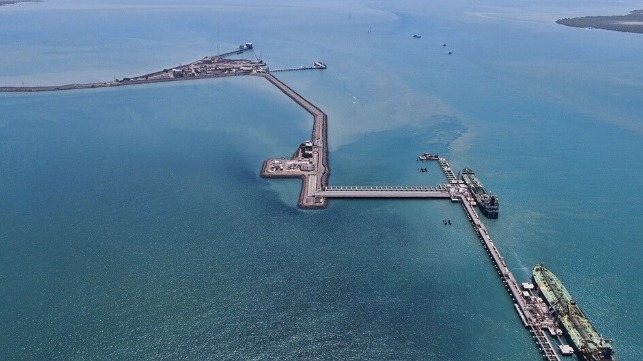
India's refiners might make out well by taking a deal with the United States to buy lots of Venezuelan oil, according to the State Bank of India.
Indian refineries became major consumers of gray-market Russian crude oil after the invasion of Ukraine in 2022, drawn by deep discounts and the prospect of profitable crack spreads for overseas sales of the resulting products. (Controversially, a substantial share of the refined-product exports from these refineries ended up for sale in Europe, where Russian oil is sanctioned.) Some of the biggest early operators in the "shadow fleet" tanker market for Russian oil transport were based in India, reflecting the geography of the trade.
The discounts that drew Indian refiners to Russian suppliers could also make Venezuelan oil attractive, according to SBI's analysis, and could reduce national energy costs by about $3 billion. A discount of about $12 per barrel could make the product financially competitive, the agency said, depending on transport costs and insurance. Deeper discounts - like those currently available at prevailing prices - would save money. Venezuelan crude is currently trading at just $51 per barrel, $17 cheaper than the benchmark Brent index.
However, Venezuelan crude is discounted for a reason: it is not like Brent, and has different processing requirements. The standard Venezuelan Merey blend is high in sulfur, and it contains unusually high amounts of vanadium, which requires special treatment in the refining process. Handling this feedstock could require changes to Indian refineries, which would add upfront cost, SBI noted.
The other limiting factor could be Venezuelan production. Under U.S. export management, the nation's producers have increased output to 800,000 bpd, but this is still far short of the record 3.8 million bpd that Venezuela achieved at peak in 1970. Short-term improvements could boost output above 1.0 million bpd, industry experts say, but major improvements would take tens of billions of dollars and likely the better part of a decade to construct - if investors can be found. Venezuela's history of political instability, its cyclical interest in a policy of foreign asset appropriation (twice), its high debt levels and the high technical requirements of its oil production infrastructure all discourage new entrants. ExxonMobil CEO Darren Woods described Venezuelan fields as "uninvestable" at a press conference last month. Given the challenges to increased output, the amount available to ship to India could be limited by the practical realities of production.

that matters most
Get the latest maritime news delivered to your inbox daily.
Publicly, the Trump administration has encouraged India to sign on as a major buyer and stop purchasing as much Russian oil. "We’ve already made that deal, the concept of the deal," Trump told media during a flight on Air Force One on Saturday.
The administration applied a 50 percent tariff on Indian goods last August for its continued purchases of Russian oil, and Indian refiners responded by altering their mix. The aim is to incentivize a transition to non-Russian sources, reducing Moscow's oil revenue and its ability to pursue its war aims in Ukraine. For India, switching to Venezuelan oil - with the Trump administration's backing - could improve the odds of getting U.S. tariffs lifted, in addition to any savings on the oil itself.