
Op-Ed: What's the Plan for the Strait of Hormuz?
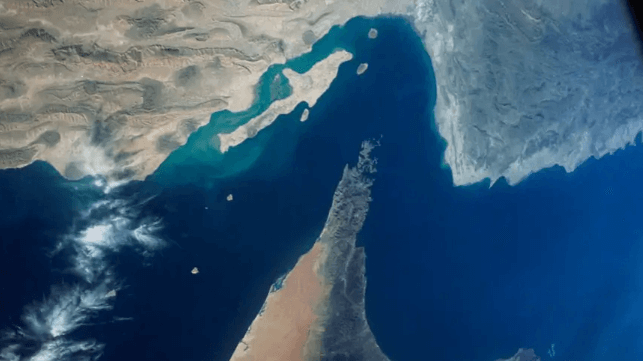
The Straits of Hormuz are effectively closed.
This has been achieved by dint of a relatively small number of attacks on all classes of merchant shipping, with sufficient risk to life to call off further attempted transits for the time being, reinforced by an increase in premium rates to levels which in any case make transits in and out of the Gulf for the time being uneconomic.
Global trade flows can absorb a closure of one of the world’s busiest shipping channels for a short period of time. But pressure will be rising all the time, both to get oil and gas out of the Gulf and basic essentials into Gulf countries which are all highly import-dependent. The situation is exacerbated because while effectively a sea blockade is in place, there are also major restrictions on the air transport of goods.
So what’s the plan to get the Straits reopened?
Firstly, what is the threat which needs to be suppressed? The nature of the threat is much changed from the days during the Iran-Iraq war 50 years ago when military operations managed to keep the Straits open. The situation is much more akin to the recent Houthi Red Sea blockade – where Iranians IRGC advisers played a role in designing the scheme which the Houthis used to restrict, but not entirely eliminate traffic flows, using a mixture of mines, anti-ship cruise missiles, drones, speedboats armed with short-range weapons, and direct boardings from skiffs and helicopters.
That range of threats is analogous to what merchant mariners now face in the Straits, albeit with two differences: the Straits are longer and narrower, permitting use of a wider range of weapons and reducing the difficulties for Iran in identifying targets. The United States has already neutralized the other differentiator: use of frigates and corvettes, which the Houthis never had, and which the Iranians no longer have either.
US and Israeli attacks have by all accounts been very successful in detecting and destroying both permanent and mobile missile and drone launchers. But just as the entire Houthi armory was difficult to account for, and the Houthis retained the ability to launch drones and missiles even at the end of the campaign against them, it is likely that sufficient capability has been hidden away and dispersed to pose a continuing threat even if the bulk of the force has been destroyed. To maintain a credible threat, which could be as low as the ability to launch one or two attacks a day on shipping in the Straits, the Iranians only need to mask a small number of launchers. To entirely suppress the threat would be extremely difficult – but American planners know this, and could have a plan on how to achieve this.
A sanguine assessment however is that the Iranians will manage to retain for some time an ability to mount one-off attacks; this is certainly suggested by their willingness even after five days of war to extend their range of attacks, for example targets in Azerbaijan. To counter a persistent threat, there will be a need for active optical and electronic surveillance, with an immediate response capability, covering potential mobile launcher firing points along at least 250 miles of Iranian coastline and its hinterland, from Abu Musa in the West to Jask in the East.
A minesweeping capability, and the means to keep a swept channel clear, is also necessary. Shipping channels also have to be kept completely clear of small craft and fishing boats, which the Iranians could use both for cueing long-range attacks and for mounting close-quarter physical attacks. Lastly, one needs naval vessels to provide close-in electronic counter-measures, detection and intercept protection for merchant vessels making the transit.
It is difficult to envisage such a screen being maintained permanently, allowing use of the Traffic Separation Scheme channels as it operates in peacetime. It might be possible to provide largely effective protection on a convoy basis, and no doubt marine insurance cover could be put in place.
But critically, this could not be done unless merchant vessels acknowledged there would be some residual risk. Mariners took that sort of mortal risk in previous wars when the Merchant Navy tended to be manned by nationals of the nations doing the fighting. But with international crews on ships owned in one jurisdiction and flagged in another, this is not really an ask which owners and managers can any longer put to crews. If the price was right, some might sign up, but not for reasons of patriotism. 355
However, even a convoying arrangement embracing some acknowledged risk could not float unless there were sufficient naval vessels available to provide the convoy escorts, many more vessels than could be furnished by the United States alone. Keeping the Straits of Hormuz open will not feature highly on Israel’s strategic plan, focused narrowly as it always does on national survival and security. As yet, there are no signs of countries with navies of sufficient sophistication being ready to volunteer for the task. On the contrary, with the decommissioned HMS Lancaster symbolically tied up in Bahrain, some nations are actively walking away from assuming any responsibility for the safety and protection of merchant shipping on their registers or serving their economic interests.

that matters most
Get the latest maritime news delivered to your inbox daily.
Measuring the disparity between the threat and the capability response needed, it is reasonable to conclude that a military solution to opening up the Straits of Hormuz is not yet feasible. Given the confidence of U.S. CENTCOM commander Admiral Brad Cooper after five days of operations, that is likely to change. Until then, the only potential solution to the current closure of the Straits lies within the political and diplomatic realm, a possible product of a cessation of hostilities or ceasefire negotiations - but not one being countenanced by either side or even as yet being suggested by the Omanis, the region's perennial diplomatic intermediaries and peacemakers.
The opinions expressed herein are the author's and not necessarily those of The Maritime Executive.