
Executive Interview: Hayato Suga, President & CEO, ClassNK
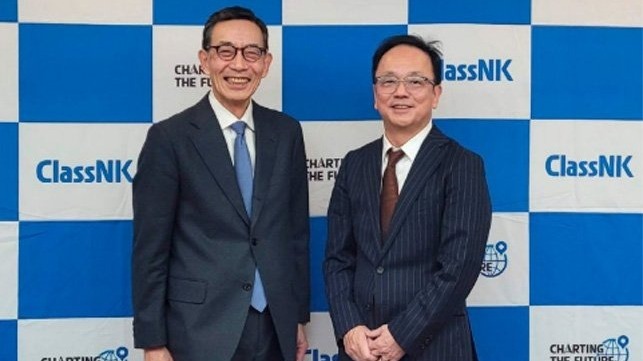
(Article originally published in Mar/Apr 2026 edition.)
Tell us about yourself. How did you pick the maritime industry as a career, and what brought you to ClassNK?
In 1986, when the maritime industry was facing a major downturn, I joined ClassNK.
While many of my classmates from the Naval Architecture Department at Hiroshima University pursued careers in other industries, such as the automotive sector, I deliberately chose to enter this field. Rather than focusing on specialized research, I wanted to contribute to the maritime industry as a more comprehensive field. For this reason, l aspired to pursue a career with a classification society, where I believed I could gain broad experience and make meaningful contributions.
Can you give us a brief history of ClassNK since its founding in 1899?
ClassNK was established in 1899 as Teikoku Kaiji Kyokai and marks its 127th anniversary this year. Over the years, it has grown alongside the development of shipbuilding technology and the expansion of global maritime trade.
Since I joined the organization in 1986, it has continued to develop significantly with its registered fleet increasing roughly fourfold from about 70 million gross tons to more than 280 million gross tons today.
What does the "NK" refer to?
"NK” stands for "Nippon Kaij Kyokai," which translates literally as "Japan Maritime Society." We are referred to as "ClassNK" or just "NK.”
Who owns ClassNK? Is it a not-for-profit company?
ClassNK is a General Incorporated Foundation and operates as a nonprofit organization. We have no shareholders, which allows us to maintain the neutrality and integrity essential for a third-party certification body.
Tell us about the many services ClassNK offers. Are they all in maritime?
Our core mission remains maritime safety and marine environmental protection through ship classification and certification. Building on the expertise and knowledge accumulated through many years, our services have expanded beyond traditional maritime boundaries to include renewable energy, land and air transportation, and logistics.
Recently, we launched certification for sustainable aviation fuel (SAF), and we've also been active in drone-related businesses.
Are your clients mainly Japanese companies?
Our clients include shipowners, shipyards and equipment manufacturers from all over the world. About 50 percent of our registered vessels are associated with Japanese companies, and we're also widely recognized by customers outside Japan.
How many offices and employees are there? Is ClassNK the biggest class society?
ClnassNK has approximately 2,000 employees at 130 offices worldwide. With about 9,700 vessels on our register, totaling approximately 280 million gross tons, we're one of the world's largest classification societies and enjoy a high level of trust from customers around the globe.
It's been a year since you became CEO last March, congratulations! You mentioned two goals at that time – to strengthen the company's international competitiveness and expand its range of services. How has that been going?
Thank you very much. Assuming the role of President & CEO has reinforced my awareness of the importance of our organization's mission and the responsibility it carries. In terms of strengthening our international competitiveness, we're enhancing the capabilities of our overseas offices and further deepening our relationships with global clients.
As for expanding our service areas, we've begun providing fuel certification in the aviation sector, among other initiatives, while also extending our certification services beyond traditional classification activities.
You also mentioned that you would like ClassNK to be the best-regarded class society – the “top" choice and the "leader.” What does that mean?
Being "top" is not simply about sales or market share. It's about being recognized as the most trusted organization in its field. To achieve this, we believe it's essential to respond quickly to industry challenges and provide the best services aligned with the needs of our customers.
What are some of the biggest advantages that ClassNK brings to the competition for class services?
Our greatest asset is our people and our longstanding credibility. We value an organizational culture in which employees think and act on their own initiative. Many of our people are hired not for narrowly defined roles but to develop broad capabilities through comprehensive knowledge and experience, enabling them to respond to a wide range of needs.
We believe the value of ClassNK is realized when such people build trust.
2026 marks the fifth and final year of the company's Mid-Term Management Plan. What is that, and will there be a successor plan?
Under the 2022-2026 plan, we have been working to strengthen our intelligence and planning functions, establish a comprehensive service system to evaluate and certify the reliability and sustainability of businesses, develop new business fields, promote R&D and stabilize and enhance our business infrastructure.
As we enter the final year of the plan, we're focusing on achieving these targets while also preparing the next strategic plan, looking ahead to further evolution through digital transformation, including the use of AI.
You mentioned earlier that your people are the company's most important asset and that change, has to begin with them. Tell us about the reforms in ClassNK's corporate culture that you initiated last year and your vision for further changes.
To respond to the changing needs of society and our customers, simply "maintaining the status quo" means falling behind. Proactive business transformation is therefore essential.
The personnel system reform implemented last year was aimed at supporting the evolution of our business by creating an environment in which each employee can approach their work with motivation and fully demonstrate their capabilities, thereby fostering a strong and forward-looking organizational culture.
Through the effective operation of this system, we aim to build a foundation where individuals and the organization grow together. By revitalizing our people and our organization, we believe the ideal is to create an environment where everyone can shape the future while pursuing sustainable value.
What does it take to recruit and retain young experts in the Japanese market? What's most important to the new generation of engineers, and what makes them choose ClassNK?
As in other sectors, when young engineers choose to make their career in the maritime industries today, factors such as social significance, opportunities for growth and flexible ways of working have become increasingly important.
The maritime industry is currently undergoing a major transformation, particularly in areas such as decarbonization and digitalization. ClassNK plays a role in ensuring the safety and reliability of these new technologies, and we believe this provides an attractive environment for young engineers who wish to apply their expertise while contrib?ting to solving societal challenges.
Another reason many choose ClassNK is the opportunity to work in a global environment, collaborating with shipyards and shipowners around the world and engaging with a wide range of technical fields.
How is Al impacting ClassNK's workflow and business processes?
The use of AI goes beyond simply introducing technology to improve efficiency. It has the potential to drive organizational transformation through the rationalization of operations and even to transform the business model itself.
Specifically, Al has the power to fundamentally advance the services we provide to our stakeholders in areas such as risk prediction, vessel safety assessment and optimization of environmental impact reduction. We believe we are now at a critical stage where it's important to establish clear directions for AI governance and move forward with implementation more quickly and reliably.
What are the biggest new opportunities for ClassNK?
Many new technologies are being developed to address societal challenges, including the reduction of GHG emissions. For these technologies to be widely adopted in practice, it's essential to ensure their safety and reliability. This creates significant opportunities for classification societies.
We will continue to strengthen our services in the development of new technologies, including alternative fuels, as well as their implementation support and CCS (carbon capture & storage) systems. In addition, we'll expand our scope and further advance our efforts in areas such as fuel certification and environmental certification.
As Japanese shipyards consolidate, ClassNK is looking overseas for new opportunities. Are there specific regions that are most promising?
Japan remains an important market for us. In Japan, various initiatives are currently being promoted under a government-led roadmap aimed at strengthening the shipbuilding industry and securing human resources, and we intend to continue supporting those efforts.
At the same time, we aim to further enhance our international presence and earn broader trust by expanding our activities overseas. Gaining the trust of a wider range of stakeholders in our certification is, in itself, an important contribution as a classification society. For Japanese shipyards as well, it's essential that the credibility of our certification is recognized by their business partners.
We believe that our certification being globally trusted by shipowners and other stakeholders also contributes to supporting Japan's maritime industry.
Where, in your view, does the future of classification lie? Is it beyond maritime?
Classification societies are often regarded as the origin of certification. The value of certification is created only when it is trusted and recognized by stakeholders. We consider the trust built over more than 125 years is what we consider to be one of our greatest strengths.
Classification services originally began in the maritime sector. However, by leveraging the trust and expertise developed there, we've expanded our activities into a wide range of fields including renewable energy, GHG reduction, drones, and sustainable aviation fuel (SAF), thereby contributing to the resolution of societal challenges.
Although the external environment is constantly changing, we believe that classification societies will continue to shape their role and future by responding to expectations from societies in each era with trust.
What's your biggest challenge right now?
Currently, the maritime industry continues to face a highly uncertain environment amid shifting geopolitical conditions and ongoing discussions surrounding regulations and policy frameworks. In this context of unprecedented instability, the industry is also being called upon to respond to transformations such as digitalization and decarbonization.
Under these circumstances, we believe it's essential for us to carefully consider how we, through our classification and certification services, can address these challenges and contribute to the industry.
Excellent! What do you like most about your work? What gives you the most satisfaction?
The thing that gives me the greatest satisfaction in my work is knowing that we are contributing to the safety of the maritime industry and the protection of the environment. The work of a classification society is not always visible to the public, but I take great pride and responsibility in knowing that our reviews and certifications support the safe operation of ships and the practical implementation of new technologies.
Early in my career, I had the opportunity to be involved in the survey and certification of an LNG carrier that adopted a membrane-type tank newly developed for the first time in the world. Through this experience, I came to understand that the role of a classification society is not simply to check compliance with rules but also to ensure safety while contributing to the development of the industry.
Being able to support the practical application of new technologies and contribute to advancement of society is what makes this work both meaningful and rewarding to me.
What have we left out? What else should our readers know about Hayato Suga and ClassNK?
that matters most
Get the latest maritime news delivered to your inbox daily.
Our guiding philosophy is not to pursue the greatest profit with the minimum service but rather to earn the greatest trust by providing the highest level of service to our clients. We will continue to work together as one team to remain a trusted partner in building our clients' future. -- MarEx
The opinions expressed herein are the author's and not necessarily those of The Maritime Executive.