
To Penalize Iran, Azerbaijan Could Interdict its Caspian Sea Trade
On March 6, Iran’s President Masoud Pezeshkian announced that ‘There will be no further attacks or missile launches towards neighbouring countries, unless attacks against Iran originate from those countries. President Pezeshkian’s influence over the decentralised IRGC command structure which appears to running Iran’s war is unclear, but it should be noted that both the Armed Forces General Staff (separate from the IRGC) and Iran’s Foreign Minister Abbas Araghchi have been denying that Iran has been attacking Gulf countries, despite ample evidence to the contrary, but indicative of the IRGC’s unwillingness to accept political coordination.
Whether Gulf countries accept Pezeshkian's implicit apology, notwithstanding the impact that the attacks will have on the GCC economic model in the long-term, is one matter. What may be even more challenging is whether Azerbaijan will accept Iran’s U-turn, after Iran launched an Arash-2 drone attack on Azerbaijan’s Nakhchivan International Airport, which caused damage to a terminal building and injured two civilians. Azerbaijan responded immediately by closing its land border with Iran, in advance of deciding what other retaliatory measures might be appropriate.
Iran and Azerbaijan have had a fraught relationship in recent years – friendly in a formal sense, but with barely-concealed bitterness beneath the surface. Iran treats Azerbaijan with some arrogance, as if it is within its sphere of influence and should obey orders. It occasionally threatens or issues Azerbaijan instructions, which are ignored, or makes policy announcements affecting both countries without coordination beforehand – as when Iran announced that road and rail routes to Russia were to be opened, without noting they would need to pass through Azeri territory.
There have been two particular incidents – an attack in January 2023 on the Azeri Embassy in Tehran which killed a member of staff, and thwarted attempts to set up a Hezbollah-type organization in Azerbaijan. The Azeris suffer these insults stoically, borne of nationalist sentiment and confidence, particularly boosted since the successful war in 2023 to re-integrate Armenian-populated Nagorno-Karabakh. Nor has Azerbaijan sought to inflame tensions amongst the Azeri ethnic minority – Iran’s largest – in Northern Iran.
More generally, Iran is worried that Azerbaijan may impede its truck route through the Lachin Corridor in Armenia, and that Azerbaijan enjoys good relations with Israel – which is one reason why they won their war against Armenia.
Why should the maritime community have an interest in this Caucasian tale of intrigue and fraught relationships? Firstly, Azerbaijan may decide enough is enough, and actively support the Azeri separatist cause in Iran. This could be highly dangerous for Iran.
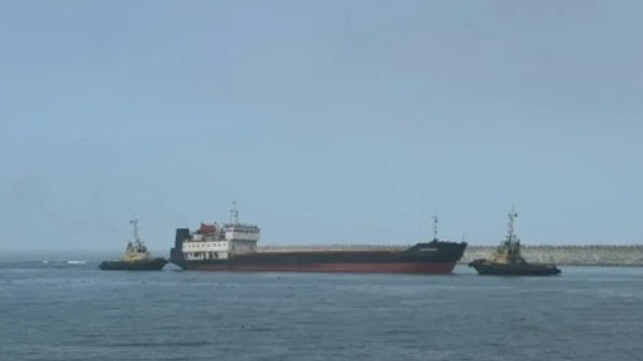
The other possibility is that Azerbaijan will extend the closure of its land borders with Iran to include the right of Iranian shipping to pass through Azeri territorial waters, disrupting Iran’s main means of transport with Russia – both for arms and ammunition, and other crisis-essentials which will soon run short in an Iran where maritime trade via the Gulf is at a standstill.

that matters most
Get the latest maritime news delivered to your inbox daily.
There has never hitherto been a major dispute interrupting good relations between the five countries bordering the Caspian Sea. But should Azerbaijan decide on this course of action, Israel might see an opportunity to take an active part in enforcing it. Ukraine as well would certainly like to interdict the flow of Iranian weaponry to Russia, as it has done previously. But Azerbaijan has means of its own to interrupt traffic. Its American and Turkish-trained navy has Osa-class missile boats, a modernized Petya-class corvette – and four Triton-class midget submarines. The air force has MiG 29s, attack helicopters and Israeli drones, which proved decisive in the 2023 war with Armenia.
Collectively, Azeri force are more than a match for a depleted and otherwise preoccupied Iranian Northern Fleet.