
Building Resilient, Low-Carbon Supply Chains With ITS
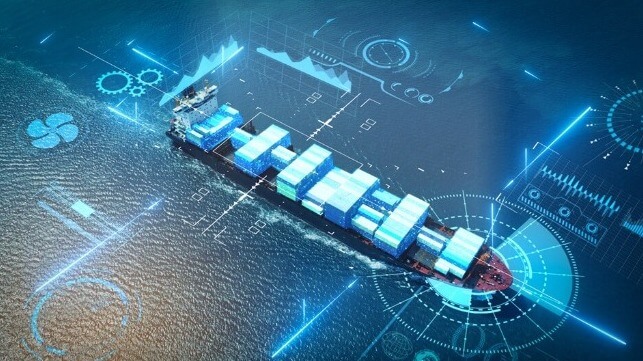
Sustainability and resilience in shipping are not the result of a single decision. They come from daily practice, informed choices and the systems that help people make them. Other transport sectors already use connected digital networks to support safe and efficient movement. Maritime has begun to digitalise, but it has not yet built the joined up systems that allow data, infrastructure and operations to work together. Without that connection, the industry struggles to respond to growing pressure.
Ports and shipping face more frequent disruption from extreme weather, political tension and shifting trade patterns. These forces test the reliability of maritime transport and increase pressure to meet environmental targets. Many of the tools needed to manage this change already exist, but they often operate alone. This limits visibility, slows coordination and increases the risk of delay. This is where Intelligent Transport Systems (ITS) thinking, or Maritime ITS (MITS) when applied to this sector, can make a difference.
A connected future
MITS create a shared digital architectire that helps technologies communicate and support real time decisions. This is not a single app or platform. It is a framework that links vessels, ports and logistics through common data standards and agreed processes. The goal is simple – give the right people the right information at the right moment, so they can make better decisions.
With that foundation in place, day to day tasks become easier. Port calls can be planned with confidence, routing decisions can reflect actual weather and real-time traffic. Handover from ship to shore becomes smoother. Operators can manage energy use more carefully and report on emissions with greater accuracy. Studies in other transport modes have shown sizeable improvements in efficency and safety when data flows across a whole network. Maritime can expect similar results when it builds a coordinated system.
The benefits are clear and measurable. Studies show synchromodal systems – where real-time data, advanced algorithms and multi-modal transport options are combined – can reduce road freigtht transport costs by 35.5%, shortening terminal waiting times by 37.7% and improving overall efficiency by 33.3%. For maritime, MITS means fewer queues at anchor, smoother cargo transitions and lower emissions. Adaptive voyage speed optimisation alone can cut emissions by 14%. These gains matter when the industry faces mounting pressure to decarbonise and comply with environmental regulations.
Digital transformation for maritime resilience
The operating context is changing. Storms and heat are becoming more disurptive. Trade routes shift quickly when conflcit or sanctions alter demand. New environmental requirements tighten year by year. In this setting, predictability is hard to achieve with isolated tools. Maritime needs an architecture thats supports anticipation and safe operarions when conditions change. MITS enables real time coordination across maritime information silos, building greater resilience that leads to a more sustainable shipping industry, which in turn supports socio-economic stability and simultaneously protects habitats such as coral reefs, mangroves and seagrass beds. These ecosystems are interconnected, each supporting the other and the communities that depend on them.
This is also a question of competitiveness. Reliable schedules reduce costs across the supply chain. Better coordination shortens time at anchor and speeds the flow of goods inland. When ports, carriers and logistics providers can see the same picture, decisions become faster and more consistant,turning disruption into managed flow through better shared data and timing alignment. That is good for national economies as well as for individual operators.
Consider a common pain point. A vessel’s estimated time of arrival is uncertain. Location updates are inconsistent. In some regions there is a risk of spoofed coordinates. Without trusted information, port staff and landside partners cannot plan resources with confidence. MITS tackles this by setting shared data standards and secure channels for real time exchange. Everyone sees the same information, updated as conditions change. The result is less confusion, fewer last minute changes and a safer operating environment.
Another example is port call coordination. A connected system can link berth availability, tug and pilot scheduling, yard capacity, gate operations and rail slots. If a storm front delays arrivals, the system can help sequence movements to reduce queuing and avoid unnecessary fuel use. It can also provide early warning to inland transport so freight can be staged rather than left waiting.
Green shipping corridors are a further case. These routes depend on dependable planning, verified data and close cooperation between ports, carriers and energy providers. MITS supports that cooperation by creating a dependable picture of demand, vessel readiness and bunkering needs. That helps reduce energy waste and increases confidence that environmental goals can be met alongside commercial ones.
Harnessing MITS to better understand our oceans gives operators the insight to balance commercial activity with environmental stewardship. Beyond compliance, it helps meet decarbonisation targets without sacrificing profitability. Cruicially, it equips the sector to adapt swiftly to changing conditions, keeping operations efficient and resilient.
Technology is ready. Satellite connectivity at sea is faster and more reliable than it was a few years ago. Machine learning models can help forecast arrivals, predicts port congestion and support routing. The sector now needs to join these tools into a coherent whole so information flows to the people making time critical decisions. The strategic effort to implement MITS would bring new intelligence to operations, allowing shipping to function at the edge of optimisation and adapt quickly when conditions change.
The promise of tomorrow
When MITS is in place, operators can see across the network and act sooner. Vessels spend less time waiting at anchor, port calls are smoother and inland logistics run more predictably. Safety improves because teams share a consistent picture of risk and emissions fall because energy use is planned rather than reactive. These are practical gains that help the sector meet environmental commitments while protecting service quality.
The maritime sector cannot afford to wait. Shipping supports communities and economies around the world, but its operating environment is becoming less predictable each year. The sector now needs a connected digital foundation that can withstand the demands of climate, trade and regulatory change. Intelligent Transport Systems offer that foundation. The approach to technology is proven, adoption costs are falling and the benefits are already visible where early pilots have taken place.
that matters most
Get the latest maritime news delivered to your inbox daily.
The question is no longer whether maritime can integrate its digital systems. The question is whether it can afford not to. Operators who act now will be better prepared for disruption, better positioned to meet environmental expectations and better able to compete in an increasingly demanding market. Those who delay will face rising uncertainty and risk diminishing control over the factors shaping their operations. MITS gives the industry a practical way to take control of its future, and the opportunity to do so is available today.
Tim Morris is Senior Engineer, UKIMEA at Arup.
The opinions expressed herein are the author's and not necessarily those of The Maritime Executive.