
Ukraine Pitches its Own Solution to the Strait of Hormuz Shutdown
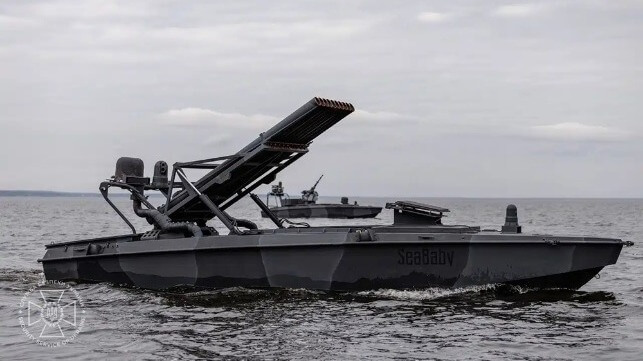
The Ukrainian government is offering to lend Gulf states its experience in reopening contested sea lanes, President Volodymyr Zelensky told reporters on Monday. Ukraine has a battle-tested system that protects its own Black Sea shipping corridor from Russian-spec surface warfare threats, comparable to the lower end of the threat spectrum currently found in the Strait of Hormuz, and it is willing to export its knowledge to clients in the GCC.
"There is an energy crisis. They know they can rely on our expertise in this area, and we discussed it in detail," Zelensky told reporters in a group chat following his return from talks in Qatar and the UAE last week. "We shared our experience with the Black Sea corridor and how it operates. They understand that our armed forces have been highly effective in unblocking the Black Sea corridor."
The closure of the Strait of Hormuz is tough to crack, and after 30 days of conflict, the U.S. has not been able to do so (nor does it expect to have an escorted-traffic scheme soon). Iran has deposited a small number of naval mines in the strait, and can target passing merchant ships with drone boats, manned gunboats and missiles to enforce its control. Since it can range the entirety of the narrow waterway with multiple classes of weaponry, the Strait of Hormuz is closed - except for traffic that Iran itself administers using a "tollbooth" passage between Qeshm and Larak Islands.
Ukraine has a sealane-defense solution that it has developed over the past four years of conflict with Russia, and the proof is in the results. Ukraine's ports receive about 200 vessel calls per month, with low casualty rates and accessible (subsidized) war risk insurance.

that matters most
Get the latest maritime news delivered to your inbox daily.
The Ukrainian solution is a layered air defense system to defeat airborne drones, combined with Ukraine's well-known drone-boat patrols to drive off the Russian Navy's surface fleet. Ihor Fedirko, CEO of Ukraine’s Council of Defence Industry, told Politico that "Ukraine has a ready-made ecosystem, fully systemic solution for protecting marine areas." Unlike manned escort vessels, which are in short supply and are politically difficult to lose, drone boats like those operated by Ukraine are attritable.
Iran also uses another, harder-to-defeat form of attack which is not seen in Ukraine. Iranian antiship ballistic missiles require missile defense technology to shoot down; for this threat, the GCC states possess American-made Patriot batteries and PAC-3 interceptors (if these assets can be spared from other areas).
Zelensky has proposed a trade to exchange Ukraine's air defense and sea-lane defense expertise for a supply of those same PAC-3 interceptors, which are in short supply and are desperately needed by Kyiv. They are valued at about $4 million each, and production is limited to about 60 units per month.