
Op-Ed: Arctic Metagaz Explosion Shows That LNG Carriers Have Risks
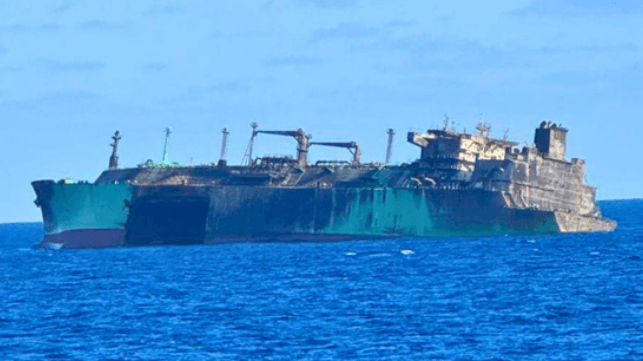
A recent explosive event involving a liquified natural gas (LNG) carrier laden with Russian Arctic gas should serve as a wake up call.
The Arctic Metagaz, a 23 year old LNG carrier reportedly linked to Russia’s so-called "dark fleet," exploded and caught fire in the Mediterranean Sea in early March while en route to Port Said. Russia's foreign ministry claims that the explosion was caused by a Ukrainian drone strike, but Kyiv has not claimed responsibility. Fortunately, the crew escaped and were rescued without any casualties. As of Saturday, the ship was still afloat and adrift near the coast of Malta.
The leaders of Cyprus, France, Greece, Italy, Malta and Spain, and other EU member states have written to the European Commission, stating that "the precarious condition of the vessel, combined with the nature of its specialized cargo, gives rise to an imminent and serious risk of a major ecological disaster in the heart of the Union's maritime space." On March 17, the Italian government warned that the Arctic Metagaz “could explode in Mediterranean at any time”.
What you're looking at is not a sunrise — it's the Russian LNG tanker ARCTIC METAGAZ (IMO 9243148) struck by a massive explosion in the Mediterranean this morning. Photographed by crew aboard a merchant vessel, via Vanguard Tech. pic.twitter.com/QrX5BWWTr0
— Christiaan Triebert (@trbrtc) March 3, 2026
The incident has drawn renewed attention to the supply chain of Russian Arctic fossil gas to world markets. As documented by non-profit organization Bellona, production is projected to reach 91 million tonnes by 2035, up from its current level of 33 million tonnes. Russia is establishing new markets as the EU plans a complete restriction on Russian gas imports starting January 1, 2027.
Such expansion would dramatically increase LNG carrier traffic in the Arctic region. LNG carriers are specially equipped to carry LNG for export and also use LNG as a marine fuel. Today, around 30 LNG carriers transport Russian Arctic gas, and by 2035, that number could rise to around 300, in a sector which (according to the ICCT) has already seen methane emissions from ships fueled by LNG increase by 180% between 2016 and 2023. As global maritime regulators prepare to meet at the International Maritime Organization (IMO) in April to discuss the decarbonization of global shipping, the incident offers a stark reminder that the climate, environmental and community consequences associated with shipping LNG extend far beyond geopolitics.
LNG is natural gas cooled for transport and made up of 85-95% methane, a short-lived climate pollutant. Along with black carbon and ozone, methane is responsible for approximately 50% of the rise in global temperatures experienced to date. The IPCC’s 2023 Climate Change Synthesis Report observed that methane concentrations are higher than they have been in at least 800,000 years.
LNG is flammable and explosive, requiring stringent safety protocols across production, transport, and use. Cooled to -162°C, it becomes a cryogenic liquid that boils rapidly when exposed to air, releasing extremely cold methane gas. When spilled—particularly on water—LNG vaporizes instantly, forming colorless clouds capable of flash-freezing exposed skin and causing asphyxiation. These vapors can ignite as "pool fires" that burn hotter than conventional fuels and cannot be extinguished, or as flash fires producing second-degree burns up to 1.6 kilometers away.
These are not merely theoretical concerns. Recent research mapping LNG carrier risks in Southern British Columbia, Canada, shows that the potential consequences of an LNG accident extend far beyond the vessel itself. In coastal regions where LNG carriers transit through narrow waterways and populated shorelines, a single incident could threaten nearby communities, marine ecosystems, and critical infrastructure. The study estimates the impacts of LNG carriers could extend up to 400 kilometers from shipping routes and facilities, highlighting how extensive the danger zone can be.
The Arctic Metagaz incident should not be treated as an isolated maritime incident. It warns us of the growing risks embedded in the global expansion of LNG supply chains. As Arctic gas production accelerates and tanker traffic multiplies across fragile seas and busy shipping corridors, the likelihood of accidents - whether caused by geopolitical conflict, mechanical failure, or human error - will only increase.
that matters most
Get the latest maritime news delivered to your inbox daily.
As the IMO prepares to debate the future of shipping fuels, liability regimes, and climate regulation this spring, at its legal committee on April 13-17, the Intersessional Working Group from April 20-24 and Marine Environment Protection Committee between April 27-May 1, incidents like that involving the Arctic Metagaz should serve as a reminder that LNG expansion carries risks that extend beyond the ship itself. Regulators deciding the future of maritime fuels cannot afford to overlook the safety, environmental, and climate consequences of an expanding LNG fleet.
Elissama Menezes and Andrew Dumbrille are Co-Directors of Equal Routes and Dr. Sian Prior is Lead Advisor, Clean Arctic Alliance.
The opinions expressed herein are the author's and not necessarily those of The Maritime Executive.