
Africa Searches for a Common Position in IMO Decarbonization Negotiations
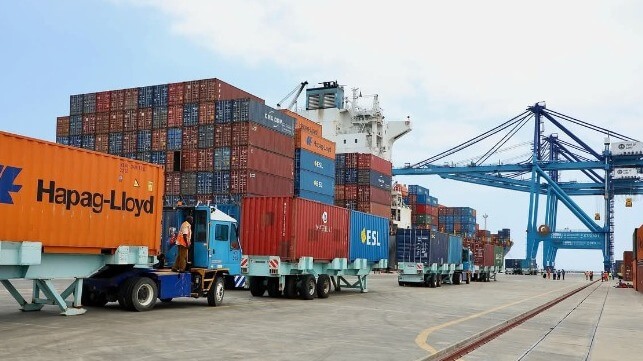
As the IMO enters a new cycle of negotiations for the global shipping decarbonization rules, the African Union (AU) is pushing for a common voice for its member states. Historically, African states have taken a fragmented approach in their negotiations at the IMO (International Maritime Organization). For instance, several African countries have submitted diverse positions for the upcoming ISWG- GHG 21 (Intersessional working Group on Reduction of GHG Emissions from Ships). Kenya has expressed support for the Net Zero Framework and even made a detailed submission on the governing principles for the Net Zero Fund. Similarly, DRC, Ghana and Togo have also expressed support for the fund. However, Liberia, a major flag state, is opposed to any form of GHG pricing in the maritime sector. Algeria is also opposed to the Net Zero Framework (NZF).
While it is not uncommon for countries from the same region to take opposing views in international negotiations, there is an emerging consensus for a harmonized approach. Last week, the Economic Community of West African States (ECOWAS) hosted in Abuja an African Union Commission (AUC)-led consultative meeting to advance a common position for the continent. The conference was also supported by the German development agency GIZ, which is assisting several African ports in green transition.
The debate for a common position has intensified with the implementation of the Revised African Maritime Transport Charter. The Charter came into force in August after a 15-year wait for ratification by member states. When the document was first conceptualized at a Transport Ministers’ meeting in Addis Ababa back in 1993, the leaders sought a framework that could improve continental cooperation in addressing maritime sector challenges. The ministers then recognized that the global shipping sector was undergoing massive institutional and technological changes, which could have a serious impact on Africa.
In fact, the Charter has provided for the creation of an African Maritime Organization to operate within the African Union Commission. Already, there exist regional maritime bodies including the Maritime Organization of West and Central Africa (MOWCA), which has a membership of 25 states. There is also the Maritime Organization for Eastern, Southern and North Africa (MOESNA). As per the provisions of the Charter, the AUC has said it is in the process of convening a Committee of State Parties to decide on the structuring of the African maritime organization. The continental body would help in advancing a common position for Africa at the IMO.
In the meantime, the AUC has been conducting studies to identify common national priorities by member states in the development of their maritime sectors. While top priorities include expansion of the port infrastructure and the shipping fleet, decisions made at the IMO could have an impact on the trajectory of these ambitions. For instance, there are concerns that African economies could face disproportionate cost pressures with the shift to green fuels, which could be up to twice the impact on developed economies.
In this regard, the AUC is hoping that a harmonized approach would position Africa as an equal partner in shaping the future of international shipping. But as it stands currently, Africa is disadvantaged in terms of deciding the shipping decarbonization regulations. Only 18 of the 44 African IMO member states have ratified MARPOL Annex VI. This is low hanging fruit for a unified Africa interested to influence the direction of the Net Zero Framework in the global shipping sector.
In her presentation at the Abuja conference on advancing the Common Position, Dr. Dola Oluteye said that African states are heavily involved in designing the NZF, albeit without a coordinated approach to engage as a continental collective.
that matters most
Get the latest maritime news delivered to your inbox daily.
“The African Common Position should be understood as a basket of needs that is sympathetic and sensitive to the heterogeneity of Africa’s 55 countries, 44 of which are IMO member states. That heterogeneity need not to produce fragmentation. This framing is not without precedent within the IMO’s own architecture. The IMO Strategy itself references a basket of mid-term measures: an acknowledgement that no single instrument can equitably serve the full diversity of the membership,” added Dr. Oluteye, Founder and Co-Chair of the Professional African Technical Network Advisory (PATNA) Initiative. The organization on behalf of the AUC Department of Infrastructure and Energy is carrying out studies to support Africa’s green transition in the maritime sector.
Dr. Dola also noted that an African Common Position does not require every African state to submit identical texts. What it requires is agreement on a common platform: a basket of shared principles, a small number of clearly defined red lines, and a disciplined coordination process.