
Iran's IRGC is Charging Millions in Cryptocurrency for Hormuz Transits
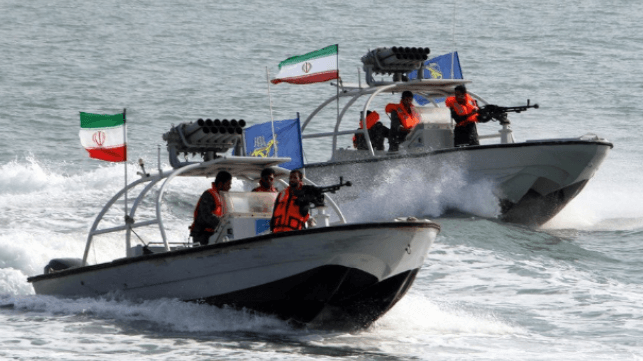
Iran's Islamic Revolutionary Guard Corps has begun to implement a formal system of payment and permitting for merchant ships requesting passage through the Strait of Hormuz, according to Bloomberg. The commercial terms are negotiated case-by-case, but are based on a tiered pricing system with payment in cryptocurrency or Chinese yuan - measures which reduce exposure to the U.S. financial system.
According to Bloomberg's industry sources, the pattern of the transactions is well-established now. A front company for the IRGC receives an application from the shipowner, detailing the vessel's particulars and its national affiliations. The application is then transferred to a specific regional unit of the IRGC Navy, which performs due diligence to make sure that the ship has no links to a hostile state, like the U.S. or Israel. Once the security check is performed, the two sides work out a satisfactory arrangement starting from a five-tiered schedule of charges, the lowest prices being granted to vessels of favored nationalities. The price floor for these commercial transactions is about $1 per barrel for tankers, or $2 million for a VLCC.
Once payment in crypto or in yuan is received, the IRGC provides the ship with a pass code valid for one transit of the Strait of Hormuz. The ship navigates to the checkpoint between Qeshm and Larak, at the north end of the strait; transmits the pass code over VHF; and receives an Iranian security escort for the rest of its passage to the Gulf of Oman.

that matters most
Get the latest maritime news delivered to your inbox daily.
The report confirms previous reporting on the $2 million baseline fee for commercial transit terms, and further confirms that some nations have negotiated no-fee transits for their tonnage. Pakistan received permission for 20 of its flagged ships to exit the Gulf via the strait, 14 more than needed, and Bloomberg's sources report that the Pakistani government has been marketing its unused transit slots to large shipowners for publicity purposes. China's foreign ministry has also confirmed making arrangements with "relevant parties" for the passage of at least three Chinese ships.
A handful of vessels are using the Iranian-controlled lane each day, according to consultancy Windward - for example, three outbound ships and three inbound on March 31. The numbers are still far below normal traffic levels, and so far, they provide only limited relief to the traffic backlog. Kpler assesses that more than 320 tankers and gas carriers are still trapped in the Arabian Gulf, along with nearly 2,000 other commercial vessels of various types and sizes.